S/V INTREPID II - Cape Dory Intrepid 40

My photo
Intrepid II is a Cape Dory Intrepid 40 sailboat, hull #2, designed by Chuck Paine and discovered by the Captain in Blue Hill Maine in 2006. The crew are Kelly (Captain) and Carol (Admiral and Blogger). In 2009 INTREPID II embarked on her West Coast journey from Victoria to San Francisco, the Baja Sur Peninsula and into the Sea of Cortez. In 2010/2011, we sailed from Guaymas, south to Bahia Banderas and back. In 2011/2012 we left Guaymas, headed south to La Paz, spent three weeks at anchor on our northward journey and rested on the hard in San Carlos. Her 4th, 5th and 6th seasons were Boat Projects related. Season 7 - an incredible amount of boat work - but no cruising. Season 8 - Tropical Storm Sergio toppled Intrepid II in San Carlos dry storage. A disappointing season of serious and costly repairs. Season 9 - continuing those repairs and still hopeful for cruising. 2024 - well cruising plans certainly have been dashed the past few seasons!
Showing posts with label Great Blue Heron. Show all posts

February 20, 2019

San Carlos Bird Life - our ever changing views


Great Blue Heron (Ardea herodias)
Every day offers a varying view of the shorebirds of San Carlos, right outside our patio.  We take advantage of the 'show' as much as possible before heading off to the works yard, market or other tasks of the day.  There appears to be the same individual Great Blue Heron, Great Egret, Snowy Egret, Tricoloured Heron and Reddish Egret wading and fishing in this section of the bay; some territoriality is evident when one or the other wanders in or purposely lands too close to another bird's chosen waters.  The following photos offer a sampling of our ever changing views.
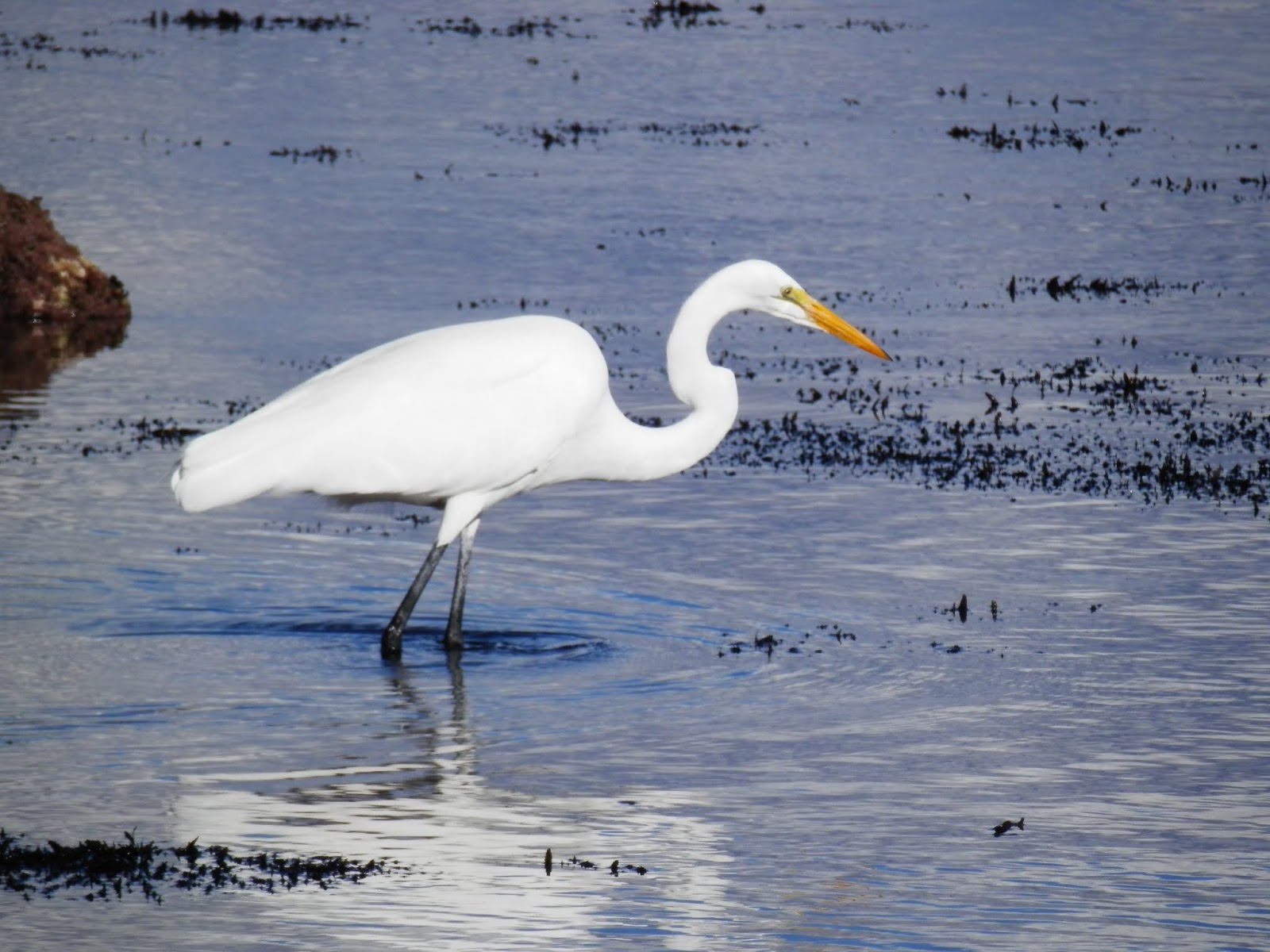
Great Egret (Ardea alba)
Snowy Egret (Egretta thula)
Tricolored Heron (Egretta tricolor)
Reddish Egret (Egretta rufescens)
Reddish Egret striding
Willets, Royal Terns, Black Oystercatchers, Killdeer, a variety of Gulls, and of course the Brown and White Pelicans, Short-eared Grebes, Cormorants are nearly daily visitors, depending on the time of day, the tides and their own schedules!
Willet (Catoptrophorus semipalmatus)
Brown Pelican (Pelecanus occidentalis)
Black Oystercatcher (Haematopus bachmani)
Family of Eared Grebes (Podiceps nigricollis)

Eared Grebe just before diving


Royal Tern (Sterna maxima) with Willet in foreground

Great-tailed Grackle (Quiscalus mexicanus)
Gathering of Pelicans and Cormorants as tide ebbs
Cormorant drying wings after diving
Yellow-footed Gull (Larus livens) and Gulls in conversation


Killdeer (Charadrius vociferus)
Brown Pelican in flight

February 19, 2018

Monday musings - February 19

Monday musings....all weekend as we dutifully followed our schedule of medications, we considered what the coming weeks have in store for INTREPID II.  There is only so much flexibility that can be built into a cruising season and we didn't allow for as much 'under the weather' time. The "San Carlos crud" we referred to earlier was actually more serious for the Captain and understandably has meant less energetic efforts on the boat.  Progress is being made of course, but the weeks slide by; cruising is still our hope, even for a few short weeks.  Stay tuned.

In the meantime, we made a second visit to the nearby Estero de Soldado on Saturday afternoon, as we had read in the local birding report of sightings of Roseate Spoonbills.  A bird we had never observed.  There are several 'off the road' tracks near the estuary and one led us to a gap in the vegetation, where we stopped and parked.  The first birds we spotted were not far away and not of the delicate, rosy variety.  A pair of Black Vultures ( Coragyps atratus) were standing quietly by observing.  The field guide mentions the 'wrinkled grey' neck and all blackish colouration of feathers with silvery patches on the wingtips.  Very conservative and still.
Black Vulture pair (Coragyps atratus)
Closer to the water we were enthused to view a pair of what had to be Roseate Spoonbills (Platalea ajaja) feeding in the shallows, although they were at a distance.  These wading birds nest and roost in low trees and forage by walking slowly, sweeping their bills from side to side to capture fish and invertebrates.  The 'spoon-shaped' bill is indeed distinctive when raised out of the water.  Based on our Sibley's guide we assume we were seeing 2nd year birds, as they were missing a distinctive reddish section to their plumage.  
Roseate Spoonbills ( Platalea ajaja)


Even from a distance, we were able to spot several other residents of the estuary and check our findings in the field guide.  Our 'best guess' is attached to each.
Great Blue Heron (Ardea herodias)


Snowy Egret (Egretta thula)

Whimbrel (Numenius phaeopus)

Osprey (Pandion haliaetus)